
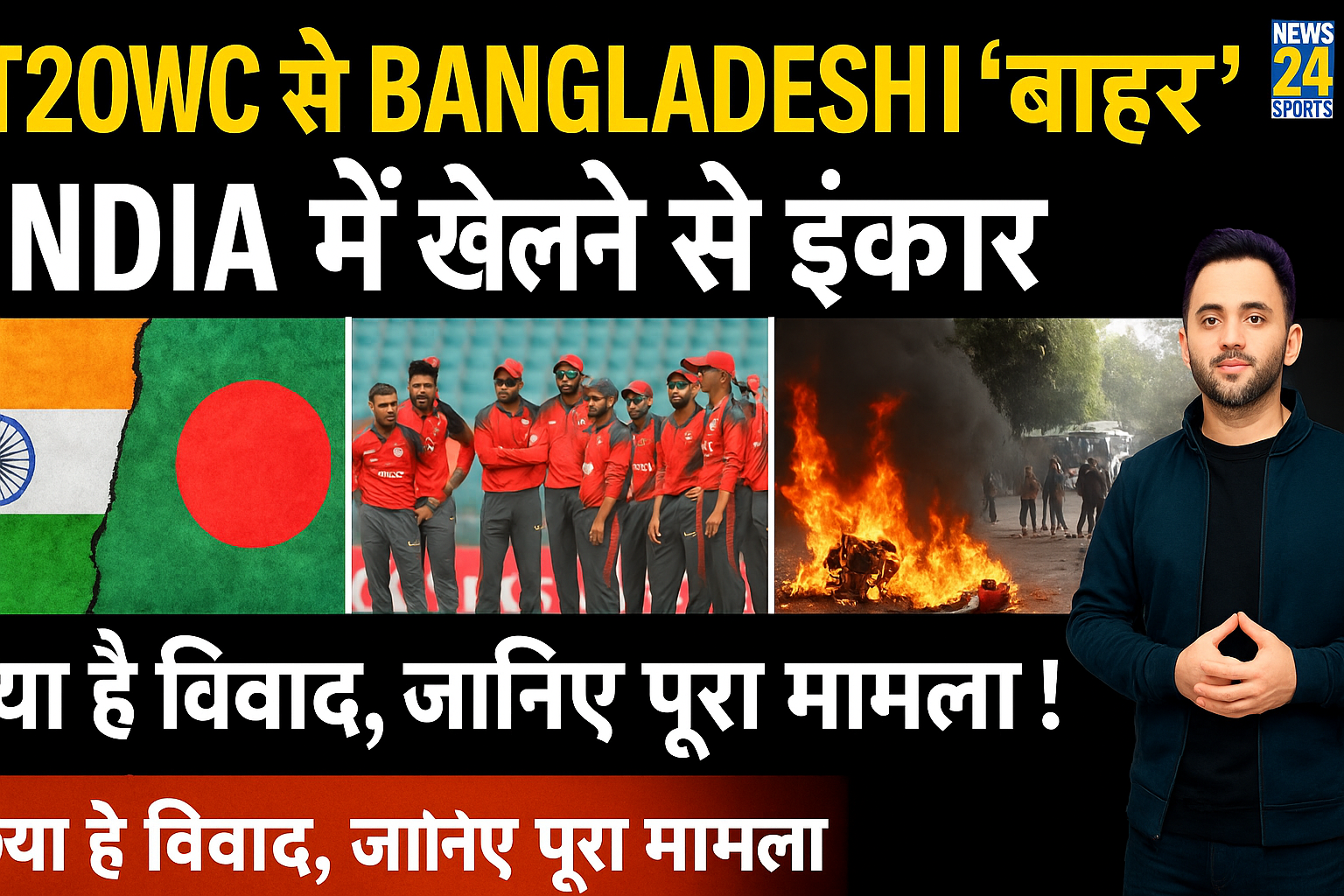
Just a month before the T20 World Cup 2026 begins on February 7, Bangladesh has officially refused to participate in matches hosted in India. Citing security concerns and political tensions, the Bangladesh Cricket Board (BCB) has requested the International Cricket Council (ICC) to shift their games to Sri Lanka. This decision mirrors Pakistan’s stance and stems from a mix of geopolitical issues and cricketing controversies.
Background: Political Tensions Between India and Bangladesh
The boycott is rooted in political unrest rather than cricket alone. Following the fall of Sheikh Hasina’s government in Bangladesh in 2024, the new administration led by Muhammad Yunus has seen increased instability. Reports of riots, arson, and targeted attacks on Hindu communities in Bangladesh have escalated tensions.
- Attacks on Hindus: Incidents of violence against Hindus have prompted protests in India, where groups have demanded action against Bangladeshi cricketers.
- Indian Response: Protests in India included calls to ban Bangladeshi players from IPL and prevent the team from entering the country.
- Broader Impact: These events have strained bilateral relations, affecting sporting ties.
The Mustafizur Rahman IPL Controversy
The immediate trigger was the removal of Bangladeshi pacer Mustafizur Rahman from Kolkata Knight Riders (KKR) in IPL 2024. Bought for ₹9.2 crore, Rahman was dropped amid public outcry over India-Bangladesh issues.
- BCCI Intervention: The Board of Control for Cricket in India (BCCI) instructed KKR to release Rahman to avoid disruptions.
- BCB Reaction: Bangladesh viewed this as an insult, leading to their boycott announcement despite announcing their T20 World Cup squad.
- Escalation: BCB’s interim sports minister declared refusal to play in India, demanding venue shifts.
Comparison to India-Pakistan Relations
Bangladesh’s stance echoes Pakistan’s long-standing boycott of India-hosted events since 2008. Matches between India and Pakistan are now played in neutral venues like the UAE or Sri Lanka.
- Similar Dynamics: Both cases involve security concerns and political disputes, leading to “hybrid” World Cup models.
- India’s Position: India has taken a firm stand, refusing to host teams from countries with hostile policies, similar to its approach with Pakistan.
- Implications: This could normalize boycotts, reducing the global appeal of ICC tournaments.
ICC’s Role and Potential Outcomes
The ICC must address Bangladesh’s request, which cites security reasons. Under ICC rules, teams can opt out if risks are verified, but refusal without proof could lead to sanctions.
- Possible Actions: Shift Bangladesh’s matches to Sri Lanka, requiring rescheduling and travel adjustments for opposing teams.
- Hybrid Model: The tournament may adopt a split format, with some games in India and others elsewhere, diluting the event’s excitement.
- Alternatives: ICC could replace Bangladesh with another qualifier, but this is unlikely due to regulations.
Key Facts and Timeline
- T20 World Cup Dates: February 7 onwards, primarily in India.
- BCB Announcement: Official refusal to play in India, request for Sri Lanka shift.
- Political Triggers: Sheikh Hasina’s ouster in August 2024; subsequent unrest.
- IPL Incident: Mustafizur Rahman dropped from KKR in early 2024.
- Precedent: Pakistan-India matches moved to neutral venues since 2008.
Expert Insights and Future Outlook
Cricket experts emphasize that while political issues drive this, the sport suffers. Former ICC officials suggest diplomacy could resolve it, but boycotts may become common. Bangladesh’s decision highlights how off-field events impact global cricket, potentially leading to a less unified T20 World Cup.
As the tournament nears, ICC’s response will be crucial. Will Bangladesh’s matches shift, or will sanctions follow? Share your views on this evolving controversy.
Disclaimer: This article is based on official statements and reports. Cricket Insights promotes factual, neutral coverage aligned with E-E-A-T guidelines.
Related Articles: T20 World Cup 2026 Squads and Schedule | India-Pakistan Cricket Boycott History